
Enterprise SaaS · Web & Mobile
Role
Product Designer
Platform
Web & Mobile
Year
2024

Overview
Sinbad is a B2B2C transport management platform built for organizations that operate large-scale transportation services. It helps transport operators manage fleet operations, trip scheduling, bookings, dispatching, driver assignments, payments, and passenger experiences from a unified platform.
The platform serves multiple industries including school transportation, employee shuttle services, tourism, government organizations, and private transport operators across the GCC and European markets.
Unlike consumer transport apps, Sinbad supports multiple user groups with different operational needs. Every decision made within the product directly impacts day-to-day transport operations, requiring the platform to balance usability with operational accuracy.



Understanding the Business
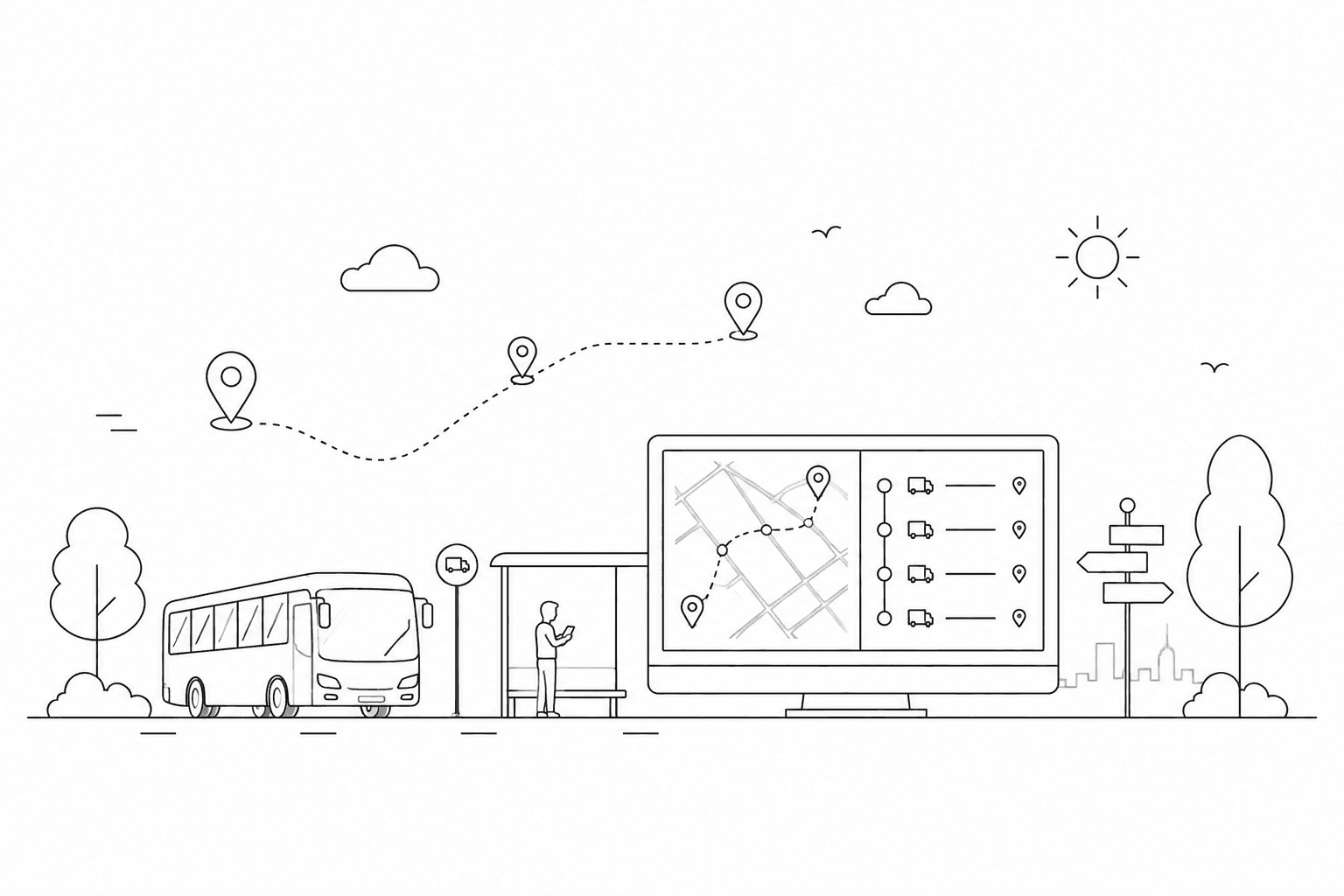
Transport operations are highly interconnected. Every action by one user can impact others across the system,Sinbad services multiple industries with unique needs but similar operational challanges.


A Small scheduling change an affect vehicles, drivers, routes, passenger and future trips
The Challenge
Over time, the platform had expanded significantly, New modules and features had been introduced to support different business needs, but the overall experience had become increasingly difficult to navigate.
Inconsistent interaction patterns
Fragmented workflows
Complex administrative processes
Repetitive data entry
Limited design consistency
High cognitive load for operators

Product Strategy
Rather than approaching the redesign screen by screen, I focused on understanding the product as an interconnected operational system.
These principles guided every design decision throughout the project
Design Around Operations
Interfaces should mirror how transport teams actually perform their work
Reduce Repetitive Work
Frequently repeated operational tasks should require minimal effort
Preserve Business Rules
Simplifying the experience should never compromise operational accuracy
Build Consistent Patterns
Shared interaction models improve learnability across the platform
Design for Growth
Solutions should support future modules without introducing unnecessary complexity
Rethinking Vehicle Block Management
One of the most meaningful product decisions during the redesign came from rethinking how recurring transport schedules were managed. Vehicle Blocks formed the foundation of daily transport operations by grouping recurring trips, schedules, assigned vehicles, and drivers into a single operational plan used by dispatchers every day. At first, the workflow appeared to function well, but after observing how operators managed recurring services, I noticed an important pattern. The schedules themselves rarely changed—school buses followed the same routes every weekday, corporate shuttles operated at the same times each day, and tourism operators often repeated identical schedules over specific periods. What changed regularly were the operational resources. Drivers took leave, vehicles required maintenance, and fleet availability shifted based on operational needs. Despite these changes affecting only the assigned resources, the system required users to recreate an entire Vehicle Block whenever a driver or vehicle changed. While this approach was technically correct, it didn't reflect how transport operators actually managed their day-to-day operations.


Looking Beyond the Interface
nitially, I approached the challenge as a workflow redesign, assuming the friction could be resolved by improving the user experience. However, after mapping the operational process and understanding how recurring schedules were managed, I realized the problem wasn't the interface—it was the underlying product model. Recurring schedules, vehicles, and drivers were tightly coupled into a single object, meaning that even a simple operational change, such as assigning a different driver or replacing a vehicle, required users to recreate the entire scheduling object. The workflow reflected how the system was structured rather than how transport operators actually managed their day-to-day operations.


Designing Within Operational Rules
The challenge wasn't making the workflow simpler. The challenge was simplifying it without breaking the operational safeguards required by transport companies.


Constraints couldn't be removed. The design had to make complexity feel invisible while preserving every operational validation behind the scenes.
Product Decision
Based on these insights, I proposed separating recurring trip definitions from operational resource assignments. Instead of rebuilding an entire recurring schedule whenever a driver or vehicle changed, the schedule itself became a reusable foundation while operational resources could be updated independently as needed. This approach allowed dispatchers to adapt to daily operational changes without recreating existing schedules, significantly reducing repetitive work while preserving all business rules, validation logic, and scheduling constraints. More importantly, the redesigned workflow better reflected how transport operators actually manage recurring services in the real world.


Collaboration
Because the proposal influenced the platform's core scheduling behavior, it required close collaboration with product managers and engineers throughout the design process. Together, we mapped dependencies across related modules, evaluated technical feasibility, refined the interaction model, and ensured the solution aligned with existing business rules and operational requirements. The conversations extended well beyond interface design—they focused on how the product should represent recurring transport operations while preserving validation logic and system integrity. After multiple design reviews and technical discussions, the proposed approach was approved and adopted into the product roadmap.
Platform Design
Improved the overall platform experience with a stronger information hierarchy and consistent pattern
Before


After


Mobile Experience
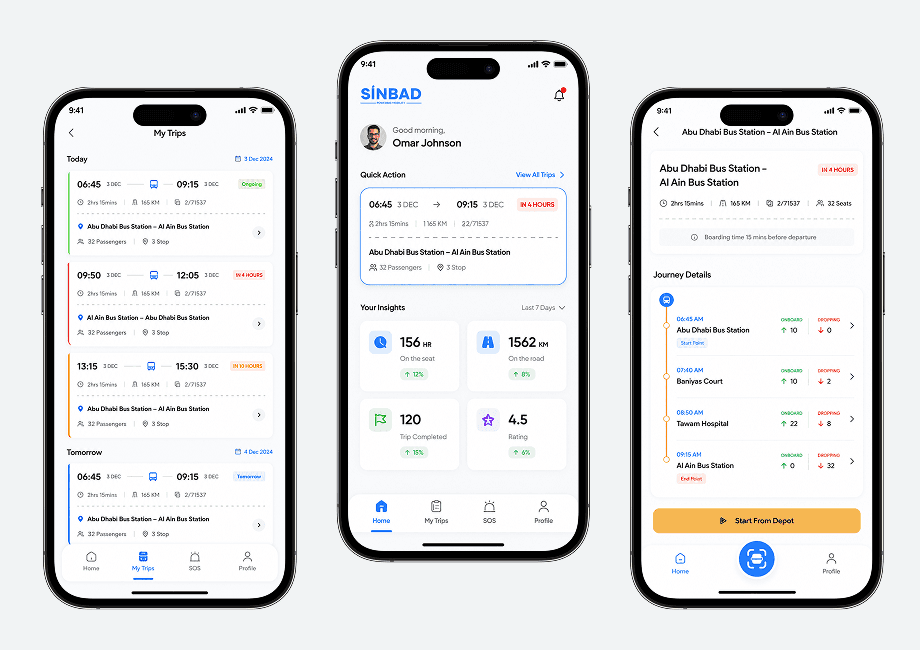
The redesign extended beyond the desktop platform to include dedicated mobile experiences for both drivers and passengers, each designed around their specific needs and responsibilities. The Driver App focused on operational efficiency by providing quick access to assigned trips, daily schedules, navigation support, trip status updates, and operational notifications, enabling drivers to manage their journeys with minimal friction. The Passenger App, on the other hand, prioritized convenience by allowing users to book transport, view schedules, track trips, manage bookings, and receive real-time travel updates. Although both applications served different audiences and use cases, they shared a consistent design language and interaction patterns with the core platform, creating a seamless experience across the entire Sinbad ecosystem.
Driver App
Passenger App

Reflection


This project fundamentally changed how I approach product design.
I learned that solving enterprise problems isn't about creating more interfaces—it's about understanding how businesses operate and designing systems that naturally support those operations.
The most valuable design decisions often happen long before pixels are placed on a screen.
They begin by asking better questions, challenging existing assumptions, and finding simpler ways to represent complex workflows.
For me, Sinbad wasn't just a redesign project.
It was an opportunity to think like a product designer, collaborate like a product partner, and build a platform that better reflects the realities of daily transport operations.